Student Loan Forgiveness Programs: Every Option Available
Federal student loans forgiveness programs changed dramatically in 2026 — and most borrowers don’t know where they stand.
Advertising
The SAVE plan is gone, new tax rules hit forgiven balances, and a key deadline for Parent PLUS loans is weeks away.
Keep reading and you will know exactly which program applies to you and what to do right now.
See Also
- Education grants for working adults — free money you are not claiming
- Best online degree programs you can complete 100% remotely
- IT certifications that actually get you hired in 2026
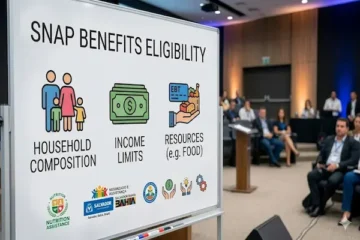
- SNAP benefits 2026 — income limits and how to apply
Federal Student Loans Forgiveness Programs in 2026: What Changed
The federal student loan landscape in 2026 is going through its most significant transformation in decades — driven by the implementation of the One Big Beautiful Bill Act (OBBBA) and the official end of the SAVE plan.
Every borrower currently in an income-driven repayment plan needs to take action this year, because the default fallback — the Standard Repayment Plan — is the most expensive option for most people and will be applied automatically if you do not choose a new plan.
Below is a complete breakdown of every active program, what it covers, who qualifies, and the critical deadlines you cannot afford to miss in 2026.
The End of SAVE and the New RAP Repayment Plan
The SAVE plan (Saving on a Valuable Education) was officially shut down in March 2026 following two years of legal battles — leaving millions of borrowers who relied on it needing to choose a replacement immediately.
What Is the New RAP Plan?
Starting July 1, 2026, the Repayment Assistance Plan (RAP) becomes the primary income-driven repayment option for federal borrowers. Here is how it compares to what came before:
| Feature | Old SAVE Plan | New RAP Plan (from July 2026) |
|---|---|---|
| Monthly Payment | 5–10% of discretionary income | 1–10% of adjusted gross income |
| Forgiveness Timeline | 20–25 years | 30 years |
| Interest Subsidy | Full subsidy on unpaid interest | Reduced or no subsidy depending on balance |
| Availability | Terminated March 2026 | Available from July 1, 2026 |
If you were enrolled in SAVE before it ended, you need to actively select a new repayment plan — either IBR (Income-Based Repayment), PAYE (Pay As You Earn), or the new RAP when it becomes available — through your loan servicer or StudentAid.gov.
Waiting and doing nothing means being automatically enrolled in the Standard 10-Year Repayment Plan, which typically results in significantly higher monthly payments and eliminates any path to income-based forgiveness.
Public Service Loan Forgiveness (PSLF): Still Active, With New Restrictions
PSLF remains one of the most powerful federal student loans forgiveness programs available — offering complete cancellation of remaining federal loan balances after 10 years of qualifying payments for government and nonprofit employees.
Core PSLF Requirements in 2026
- Make 120 qualifying monthly payments (10 years) under a qualifying repayment plan.
- Work full-time for a qualifying employer — government agencies at any level, 501(c)(3) nonprofits, AmeriCorps, and Peace Corps all qualify.
- Hold only federal Direct Loans — FFEL loans must be consolidated into Direct Loans first to qualify.
2026 PSLF Changes You Need to Know
Starting July 2026, the Department of Education has authority to disqualify employers that are determined to have a “substantial illegal purpose” — a new restriction that primarily targets certain advocacy organizations but creates uncertainty for some nonprofit workers.
A second critical change: months spent in forbearance during the SAVE plan suspension do not automatically count toward your 120-payment requirement. Borrowers in that situation must use the PSLF Buyback option — a retroactive payment mechanism that lets you purchase credit for those suspended months — to avoid losing that time entirely.
If you are in public service and working toward PSLF, submit your Employment Certification Form annually and after any job change, not just at the end of 10 years — this protects your payment count from being disputed later.
Teacher Loan Forgiveness and NHSC Loan Repayment Programs
Beyond PSLF, two of the most valuable career-specific federal student loan repayment programs are seeing significant upticks in applications in 2026.
Teacher Loan Forgiveness Program
Teachers who work full-time for five consecutive years at a qualifying low-income school can receive up to $17,500 in loan forgiveness on Direct Subsidized and Unsubsidized Loans.
Highly qualified math, science, and special education teachers qualify for the full $17,500 amount — other qualifying teachers receive up to $5,000. Applications are submitted through StudentAid.gov after completing the five-year service period.
NHSC Loan Repayment Program
The NHSC Loan Repayment Program (National Health Service Corps) saw a 173% increase in search volume in recent months — reflecting growing awareness among healthcare professionals of one of the most generous repayment programs available.
Qualifying primary care physicians, dentists, nurses, and behavioral health providers who commit to working in Health Professional Shortage Areas (HPSAs) can receive up to $50,000 in loan repayment for a two-year service commitment — with the option to extend for additional awards.
The related NHSC loan forgiveness pathway offers continued awards beyond the initial commitment, and some participants receive over $100,000 in total forgiveness across multiple service terms.
IDR Account Adjustment: Check Your Payment Count Now
The one-time IDR Account Adjustment — a historical correction that gave millions of borrowers retroactive credit for past payments that were previously miscounted — officially closed in 2024, but its effects are still being processed and reflected in borrower accounts in 2026.
If you consolidated your loans before the deadline and have a long payment history, your forgiveness countdown on StudentAid.gov may have advanced significantly from where it was two years ago.
- Action required now: Log in to StudentAid.gov and verify your current payment count toward IDR forgiveness (20 or 25 years depending on your plan).
- If your count does not reflect your full history, contact your loan servicer directly — adjustment errors are still being corrected throughout 2026.
- Mohela currently services the largest share of federal student loans — borrowers with Mohela federal student aid accounts should check their IDR tracker on the servicer portal as well as on StudentAid.gov to confirm the numbers match.
The Forgiveness Tax Bomb: Critical Alert for 2026
This is the most financially dangerous development in the 2026 student loan landscape — and many borrowers are not aware of it.
The federal tax exemption on forgiven student loan balances, created by the American Rescue Plan, expired on December 31, 2025.
That means any student loan balance forgiven in 2026 — whether through IDR forgiveness, PSLF, or any other program — may now be treated as taxable income by the IRS.
For a borrower with $80,000 forgiven in 2026, this could generate a tax bill of $15,000 to $25,000 or more depending on their income bracket — a financial shock that requires advance planning, not a last-minute surprise.
- Consult a tax professional if your loans are approaching forgiveness eligibility this year.
- Set aside estimated tax payments quarterly if you expect forgiveness in 2026.
- Note: PSLF forgiveness remains tax-free at the federal level under current law — the tax issue primarily affects IDR forgiveness and other non-PSLF pathways.
Parent PLUS Loans: July 1, 2026 Deadline You Cannot Miss
If you hold Parent PLUS Loans, there is an urgent action item before July 1, 2026.
After that date, access to income-driven repayment plans for new Parent PLUS borrowers will be dramatically restricted or eliminated under the OBBBA rules — making the window between now and July 1 the last opportunity to consolidate into a Direct Consolidation Loan and gain access to IDR plans before the door closes.
- Submit your Direct Loan Consolidation application at StudentAid.gov before July 1, 2026.
- After consolidation, apply for Income-Contingent Repayment (ICR) — currently the only IDR plan accessible to consolidated Parent PLUS borrowers.
- Missing this deadline locks you into standard or graduated repayment with no income-based option available for your loan type under the new rules.
Student Loan Repayment Plans: Which Option Is Right for You in 2026
With SAVE gone and RAP not yet available, the active student loan repayment plans for most borrowers between now and July 1, 2026 are:
| Plan | Payment Cap | Forgiveness After | Best For |
|---|---|---|---|
| IBR (Income-Based Repayment) | 10–15% discretionary income | 20–25 years | Most borrowers as a SAVE replacement right now |
| PAYE (Pay As You Earn) | 10% discretionary income | 20 years | Borrowers with loans from after October 2007 |
| ICR (Income-Contingent Repayment) | 20% discretionary income | 25 years | Parent PLUS consolidated borrowers |
| RAP (Repayment Assistance Plan) | 1–10% adjusted gross income | 30 years | Available from July 1, 2026 — simulate before enrolling |
Use the official Loan Simulator on StudentAid.gov to compare your monthly payment and total cost across plans before making any change — switching plans incorrectly can reset payment counts in some situations.
Students exploring ways to reduce education costs from the start — before loans accumulate — should also review the complete guide to education grants for working adults alongside their repayment planning.
This content is purely informational. We have no affiliation with, sponsorship from, or control over the Department of Education, StudentAid.gov, or any loan servicer mentioned here. Student loan rules and program eligibility are changing rapidly in 2026. Always verify your specific situation directly with your loan servicer or a certified student loan counselor before making any repayment or forgiveness decisions.
Explore every education resource available to you in our Education section — guides on online degrees, certifications, grants, and loan programs all in one place.