SNAP EBT Application Checklist: Documents and Steps
Advertising
When money is tight and groceries are getting stretched, a clear SNAP EBT application checklist can remove a huge layer of stress without adding confusion. This guide walks you through documents, steps, and common mistakes, while reminding you to confirm details on your state’s official SNAP website.
Disclaimer: this content is independent and has no affiliation, sponsorship, or control by any institutions, platforms, agencies, or third parties mentioned.
See also
- How to renew SNAP benefits online — step by step
- Income requirements for food stamps: what you need to qualify
- Senior SNAP program: special rules and extra benefits for older adults
- Free government phone for SNAP recipients — full guide
- Government assistance programs: everything low-income families need to know
SNAP EBT application checklist: the fastest way to avoid delays
Most SNAP delays happen for predictable reasons, which means you can prevent many of them by preparing your file like a simple “proof packet.” A strong packet includes identity, residency, household details, income or benefit proof, and the most common expense documents that can affect the calculation. Federal rules allow you to file even with an incomplete application — you can finish the rest with the agency’s help.
Your 10-minute pre-application checklist
- Write down every person who lives with you and shares food, because household composition affects eligibility and benefit amount.
- List every income source, even if it changes weekly, because missing income is the most common reason for follow-up requests.
- Collect one proof of identity and one proof of address for the main applicant, because these are verified early.
- Gather recent pay proof or benefit letters for each income source.
- Store copies safely — a labeled folder or phone photo album — because losing documents creates unnecessary delays.
How the SNAP application process flows
SNAP application steps move from “file and screen” → “interview and verify” → “decision and EBT access.” Thinking in phases helps you prepare in advance and avoid last-minute scrambling.
Phase 1 — File the application
- Locate your state’s food stamp assistance program portal — online, in person, or by mail depending on your state.
- Submit as soon as possible, even if sections are incomplete, because filing triggers your place in line and protects your filing date.
- Save proof of submission — a confirmation screen or dated screenshot.
Phase 2 — Screening for expedited service
States must screen for expedited service needs. Your application may be flagged for faster processing if your household meets emergency criteria, with benefits available within 7 days of filing.
Phase 3 — Interview and verification
- Attend the interview — missing it is the fastest way to trigger a delay or denial.
- Submit verification documents by the stated deadline, because the agency cannot finalize a decision without them.
- Answer follow-up questions quickly and consistently with your documents.
Phase 4 — Decision and EBT access
Once approved, you receive an active EBT card and PIN with benefits posted for spending. Federal law requires a decision within 30 days, or 7 days for expedited cases.
SNAP documents checklist: what to gather before your interview
| Bucket | What to gather |
|---|---|
| Identity & household | Photo ID; Social Security numbers; birth dates for all members |
| Proof of address | Lease, utility bill, or official mail; ask the office for alternatives if needed |
| Income proof | Pay stubs or direct deposit records; award letters for Social Security, unemployment, disability, pensions; invoices or bank records for self-employment |
| Expenses | Rent or mortgage statements; utility bills; childcare receipts; medical receipts if elderly or disabled |
| Special situations | Child support records; student enrollment proof; immigration documents if applicable |
Printable master checklist
- Identity: _______________
- Social Security number: _______________
- Address proof: _______________
- Household list with birthdays: _______________
- Pay proof for each job: _______________
- Benefit letters for each program: _______________
- Rent or mortgage proof: _______________
- Utility proof: _______________
- Childcare proof if applicable: _______________
- Medical expense proof if applicable: _______________
Income limits and household rules
Income requirements for food stamps depend on household size, income type, and state policy — always check your state’s official SNAP page for current food stamps income guidelines. Most households face a gross income test and a net income test; elderly or disabled households may have different rules. Apply with accurate information and let the agency evaluate under your state’s current policy.
Income reporting tips
- Use the same pay frequency the application asks for — mixing weekly and monthly numbers causes confusion.
- Report income as it exists now, not as you hope it will be, because agencies verify based on current proof.
- If hours vary, provide an honest estimate and note that income is inconsistent.
SNAP interview: what to expect
Most states require an interview for initial certification to confirm application details and clarify missing information. Prepare by keeping your application printed, organizing documents in the same order as the application, and writing down any context for unusual situations like a recent job loss or new baby. Always ask the worker for the exact list of missing items, submission deadlines, and how to send documents fastest.
Common mistakes and fastest corrections
| Mistake | Fix |
|---|---|
| Missing the interview call | Call the office immediately and reschedule |
| Forgetting a household member who shares meals | Report the change promptly and update the case |
| Income entered in wrong time unit | Provide pay stubs; ask the worker to convert your pay frequency |
| Blurry or cropped document photos | Resend with all four corners visible in good light |
| Missing the verification deadline | Submit what you have immediately; ask about alternatives for missing items |
EBT card basics after approval
EBT delivers benefits via a card that works like a debit card. SNAP covers eligible food items and food-producing seeds or plants. Hot prepared foods, alcohol, tobacco, and non-food items are not eligible. Check your balance before shopping — many states offer a mobile app or a phone number printed on the back of your card.
Closing encouragement
Needing help with food is not a character flaw, and using a checklist is a smart way to protect your family’s stability. With a clean document packet, a saved submission receipt, and a clear interview plan, you give your application the best chance to move quickly through your state’s system.
Frequently Asked Questions
What is the food stamp assistance program and how do I apply?
The food stamp assistance program is SNAP — the federal Supplemental Nutrition Assistance Program — which loads monthly benefits onto an EBT card for eligible households. Apply through your state or local SNAP office online, in person, or by mail; filing quickly protects your processing date.
What are the income requirements for food stamps?
Income requirements for food stamps vary by household size and state, and the USDA updates the food stamps income guidelines annually. Most households must pass both a gross and a net income test, while elderly or disabled members may qualify under different rules.
How do I renew SNAP benefits or renew food stamps online?
To renew SNAP benefits, submit a recertification application before your certification period ends — most states let you renew food stamps online through their official portal. Watch for the agency’s renewal notice, which lists the deadline and required documents.
What is the food stamp office number or food stamp benefits number I should call?
The food stamp office number and food stamp benefits number both vary by state and are listed on your state’s official SNAP website. The EBT balance inquiry number is typically printed on the back of your EBT card.
How do I apply through DSHS or a DTA food stamps application?
DSHS handles SNAP in Washington and DTA manages the DTA food stamps application in Massachusetts — both offer online portals to apply, upload documents, and track your case. Visit your state agency’s official website to find the correct portal for your location.
When should I use a paper application for food stamps?
A paper application for food stamps is available at local SNAP offices or for download from your state’s website, and is useful if you have limited internet access. Submitting it still protects your filing date, so send or deliver it as soon as it includes the required minimum information.
Is there a senior SNAP program with special rules?
Yes — households with members aged 60 or older or with disabilities may qualify for higher deductions and different eligibility thresholds under senior SNAP program rules. Seniors receiving SSI may also be categorically eligible for SNAP in some states, simplifying the process.
Can I apply for homeless food stamps without a fixed address?
Yes — SNAP includes provisions for people experiencing homelessness, and you may use a shelter address or case worker’s address as proof of residency. Ask your local SNAP office which address options are accepted in your state.
What is an EBT merchant application?
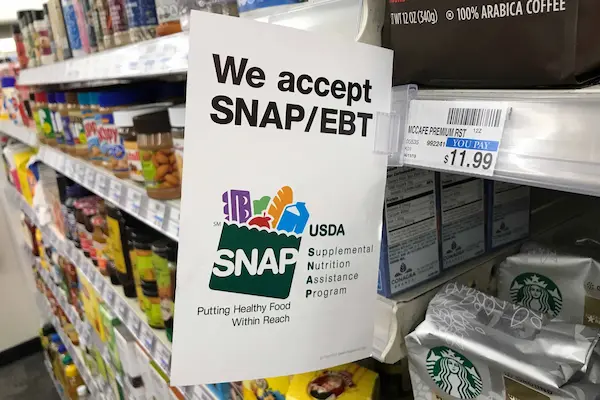
An EBT merchant application is submitted by retailers who want authorization to accept SNAP benefits — it is not something individual recipients need to complete. As a SNAP recipient, you simply use your EBT card at any store displaying the SNAP authorization sign.
What is MDHS food stamps?
MDHS food stamps refers to the SNAP program administered by the Mississippi Department of Human Services, the state agency for food assistance in Mississippi. The federal eligibility rules are the same, but you apply through MDHS’s state portal and follow Mississippi-specific procedures.
Can I apply for food stamps and medical benefits together?
In most states, you can submit a combined application for food stamps and medical benefits like Medicaid through your state’s benefits portal, since both programs share many eligibility documents. Check your state’s official website to confirm whether a joint application is available.