Government Assistance for Bills: 2026 Complete Guide
Advertising
Government assistance for bills exists for energy, phone, internet, and more — right now in 2026.
Millions qualify for help with monthly utility costs and never apply for a single program.
Find out exactly which programs cover your bills and how to access them starting today.
See Also
- LIHEAP: get help paying your energy bills
- Lifeline phone program: how to apply in 2026
- How to apply for Section 8 housing assistance
- Food assistance programs near you in 2026
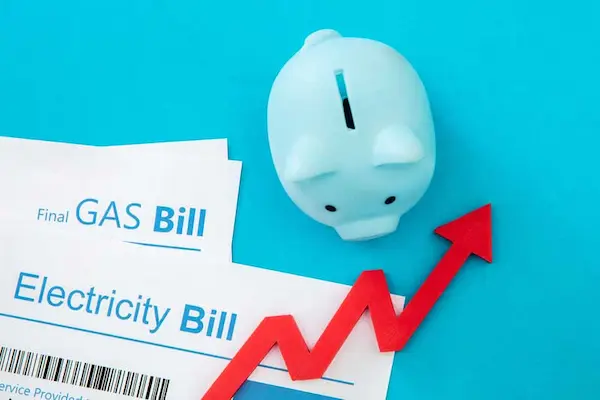
What Government Assistance for Bills Is Available in April 2026?
The federal government doesn’t pay your bills directly — but it funds a network of programs that provide monthly discounts, one-time payments, and home improvements that permanently reduce what you owe every month.
As of April 2026, the active programs covering utility, phone, internet, and water bills are:
- LIHEAP — for heating, cooling, and electricity bills
- Lifeline — for phone and internet bills
- State and local water assistance programs — for water and wastewater bills (no current federal program)
- Weatherization Assistance Program (WAP) — free home upgrades that permanently lower your energy costs
- Energy Efficient Home Improvement Tax Credit — a federal tax credit of up to $3,200 for qualifying home upgrades you pay for yourself
These programs don’t compete with each other — you can be enrolled in multiple programs simultaneously, and participation in one often makes qualifying for another easier.
Government Assistance for Electricity and Heating: LIHEAP in 2026
The Low Income Home Energy Assistance Program (LIHEAP) is the primary federal source of government help with bills for energy costs — covering both heating in winter and cooling (electricity) in summer.
For the 2026 fiscal year, approximately $3.6 billion in federal funding has been released and is actively being distributed to states.
With natural gas and electricity prices having risen significantly this year, many states have increased their Crisis benefit amounts specifically to prevent disconnections for households in immediate danger of losing service.
LIHEAP covers three distinct types of assistance:
- Heating assistance: A direct payment made to your utility company or fuel supplier to reduce your winter heating bill. Most states process heating applications through spring — check your state’s current closing date.
- Cooling assistance: Help with electricity bills during the summer months. As of April 2026, cooling assistance application windows are opening in most states — timing your application now puts you ahead of the rush.
- Crisis assistance: Urgent, expedited help for households facing an imminent shutoff notice or an empty heating fuel tank. Available year-round through your local Community Action Agency.
To apply, visit EnergyHelp.us or call the National Energy Assistance Referral (NEAR) hotline at 1-866-674-6327 to find the agency serving your county.
Applying early is critical — LIHEAP funds are distributed on a first-come, first-served basis until they run out for the year.
For a complete step-by-step walkthrough of the application process and 2026 income limits, see our full guide on LIHEAP energy assistance.
Government Assistance Programs for Utilities: Weatherization (WAP)
If your home is energy-inefficient — drafty windows, poor insulation, an aging furnace — the Weatherization Assistance Program (WAP) can provide free home improvements that permanently lower your monthly energy costs.
WAP is administered through the same local Community Action Agencies that manage LIHEAP, and in many cases you can apply for both programs at the same time through a single agency visit.
Services commonly provided under WAP include:
- Attic and wall insulation installation
- Air sealing to eliminate drafts around doors, windows, and utility penetrations
- Repair or replacement of broken heating and cooling systems
- Installation of energy-efficient lighting and thermostats
- Safety checks for carbon monoxide and combustion appliances
The key distinction between WAP and LIHEAP is that WAP delivers a long-term solution — rather than paying a portion of one season’s bill, it reduces your baseline energy consumption every month going forward.
Find your local WAP provider at communityactionpartnership.com or by calling 2-1-1.
Government Assistance for Phone Bill: The Lifeline Program
The primary federal source of government assistance phone bill support in 2026 is the Lifeline Program, administered by the Federal Communications Commission (FCC) and the Universal Service Administrative Company (USAC).
The standard Lifeline benefit provides a monthly discount of $9.25 on qualifying phone or internet service — rising to $34.25 per month for residents on Tribal lands.
Many participating providers — including Assurance Wireless and SafeLink — use this subsidy to offer plans where the federal discount covers the entire monthly cost, resulting in a free phone plan for eligible households.
You qualify for Lifeline if your household income is at or below 135% of the Federal Poverty Guidelines or if you already participate in SNAP, Medicaid, SSI, Federal Public Housing Assistance, or Veterans Pension.
One important note: the Affordable Connectivity Program (ACP), which previously provided an additional $30 monthly internet discount, remains expired as of 2026 and is not accepting new enrollments.
Lifeline is the active program for communication bill assistance — and you can apply for it simultaneously with LIHEAP without any conflict between the two benefits.
For the complete two-step application process and provider list, see our full guide on the Lifeline phone program.
Government Help with Water Bills in 2026
Water bill assistance is the most limited category of gov help with bills at the federal level in 2026.
The Low Income Household Water Assistance Program (LIHWAP) — a temporary federal water assistance program — exhausted its funding at the end of 2023 and has not been renewed with a permanent federal appropriation as of April 2026.
This means there is currently no active national water assistance program equivalent to LIHEAP.
However, meaningful alternatives exist at the state and utility level:
- State-funded water assistance programs: Several states have created their own water bill assistance funds using state budget allocations. These vary significantly by location — contact your state’s social services department or Community Action Agency to confirm what’s available in your area.
- Utility company programs: Many major water utilities offer their own assistance programs. For example, American Water operates an “H2O Help to Others” program that provides bill credits for low-income customers in states where it operates. Check your water bill or the utility’s website for information on available assistance.
- Community Action Agencies: Local CAAs often maintain emergency utility assistance funds that can be applied to water and wastewater bills — especially in cases where service shutoff is imminent.
The best starting point for water bill help is calling 2-1-1 or visiting 211.org, which maintains real-time information on all locally available assistance funds including water programs.
Government Funding to Help Pay Bills: The Energy Tax Credit
For households that are able to invest in their own home improvements, the federal Energy Efficient Home Improvement Credit provides meaningful government funding to help pay bills indirectly — by reducing the cost of upgrades that lower your monthly energy expenses permanently.
For your 2026 federal tax return, you can claim a credit of up to $3,200 for qualifying improvements made during the year, including:
- Heat pumps and heat pump water heaters
- Energy-efficient exterior doors and windows
- Insulation and air sealing materials
- Electrical panel upgrades required for qualifying improvements
- Home energy audits (up to $150 credit)
Unlike LIHEAP or Lifeline, this credit is available regardless of income — it benefits homeowners and renters who pay for qualifying improvements directly.
Consult a tax professional or visit irs.gov/credits-deductions/energy-efficient-home-improvement-credit to confirm which specific improvements qualify and the applicable credit percentages for 2026.
How to Find Government Assistance for Bills Near You
Because federal bill assistance programs are distributed through local agencies, the most efficient approach is to contact a single local resource that can connect you with multiple programs at once.
These are the two most effective access points in 2026:
- 2-1-1: Dial 2-1-1 from any phone — it’s free — or visit 211.org. This national clearinghouse for local assistance can tell you in real time which organizations in your city are currently accepting LIHEAP, local utility assistance, water help, and emergency bill relief applications. It covers all 50 states and is updated regularly.
- Community Action Agencies (CAAs): These nonprofit organizations are the frontline administrators of LIHEAP and WAP in most communities. Find your local CAA at communityactionpartnership.com — a single visit or call can help you apply for multiple programs at once and identify state-funded alternatives not listed in federal directories.
Most CAAs also connect applicants with food assistance, housing help, and job training — meaning one contact can link your household to a much broader range of support than just bill assistance.
Combining Government Assistance Programs for Maximum Impact
One of the most overlooked facts about government bills help is that these programs are explicitly designed to work together — participation in one does not disqualify you from another.
A household receiving LIHEAP for heating costs can simultaneously hold a Lifeline benefit for phone service, receive SNAP food benefits, and live in a Section 8 assisted unit.
In fact, receiving SNAP or Medicaid automatically qualifies you for both Lifeline and simplifies your LIHEAP application by satisfying income requirements in many states.
For households managing multiple programs, the practical priority order is:
- Apply for SNAP or Medicaid first — these create automatic eligibility pathways for several other programs.
- Apply for LIHEAP through your local Community Action Agency — especially now, as cooling assistance windows are opening.
- Apply for Lifeline through LifelineSupport.org using your SNAP or Medicaid approval as proof of eligibility.
- Ask your CAA about WAP eligibility and local water assistance funds.
Stacking these programs reduces your household’s fixed monthly costs significantly — and each application builds on the one before it.
This content is informational and independent. We have no affiliation, partnership, or control over federal agencies, Community Action Agencies, utility companies, or any third-party platforms referenced in this article.
Bill assistance is one layer of a broader safety net your family may be entitled to. Explore our complete public assistance guides to find every program covering housing, food, healthcare, and communication — all in one place.