EBT Card Application: How to Apply for SNAP in 2026
Advertising
An EBT card application is how you access SNAP food benefits — and the process is faster than most people think.
Millions of eligible households delay applying because they’re unsure about income limits or what to expect.
Keep reading to find out exactly who qualifies in 2026, what benefits you’ll receive, and how to apply today.
See Also
- SNAP benefits 2026 — who qualifies and how to apply
- WIC program — benefits, eligibility and how to apply
- Medicaid vs Medicare — which one covers you
- Free government phone program — how to get Lifeline
What Is an EBT Card — and How Does It Work?
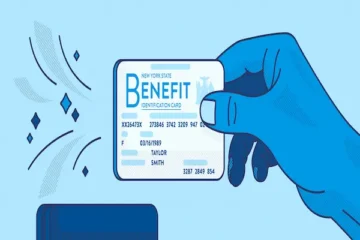
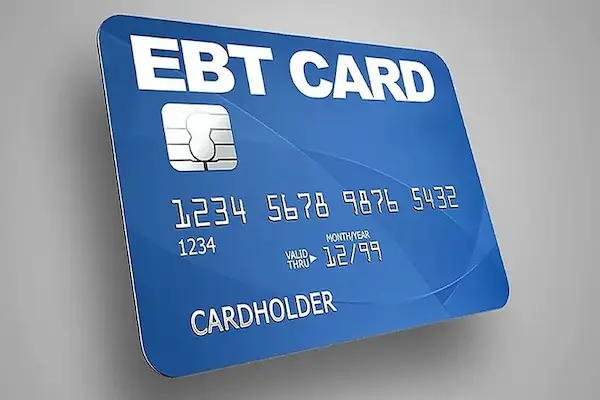
An EBT (Electronic Benefits Transfer) card is the debit-style card used to deliver SNAP (Supplemental Nutrition Assistance Program) food benefits to approved households each month.
When your application is approved, benefits are loaded onto the card automatically every month on a schedule determined by your state. You use the EBT card at checkout like a standard debit card — swiping and entering your PIN — and the purchase amount is deducted directly from your SNAP balance.
The card works at over 248,000 authorized retailers nationwide — including major grocery chains, farmers markets, Walmart, Target, and Amazon Fresh. Because SNAP is administered at the state level, your EBT card application must be submitted where you currently live.
Food Stamps Income Requirements 2026: Who Qualifies for an EBT Card
SNAP eligibility is based on household size, income, and assets. The following federal limits are effective through September 30, 2026.
| Household Size | Gross Monthly Income (130% FPL) | Net Monthly Income (100% FPL) | Max Monthly Benefit |
|---|---|---|---|
| 1 person | $1,696 | $1,305 | $298 |
| 2 people | $2,292 | $1,763 | $546 |
| 3 people | $2,888 | $2,221 | $785 |
| 4 people | $3,483 | $2,680 | $994 |
| 5 people | $4,079 | $3,138 | $1,183 |
Gross monthly income is your total household income before deductions. Net monthly income is calculated after deductions for shelter costs, dependent care, and certain other expenses — and it must fall below 100% of the Federal Poverty Level for most households.
Asset limits: Most households may have up to $3,000 in countable resources (cash and bank accounts). If any household member is age 60 or older or has a disability, the asset limit increases to $4,500.
2026 Work Requirements Update
Under recent federal policy changes, able-bodied adults aged 18–64 without dependents may be required to work or participate in an approved training program for at least 80 hours per month to receive SNAP benefits for more than three months in a 36-month period.
This rule applies to a specific subset of applicants — not all households. If you have dependents, a disability, or meet an exemption category, the work requirement does not apply to your case.
Food Stamp Application Form: SNAP Application Requirements for 2026
The food stamp application form and required documents are consistent across states. Gathering everything before you start makes the process significantly faster.
You will need to provide:
- Proof of identity: Government-issued photo ID (driver’s license, state ID, or passport) for the head of household
- Social Security numbers: For every household member applying for benefits
- Proof of income: Pay stubs from the last 30 days, your most recent federal tax return (2025), or a benefit award letter if you receive SSI, TANF, or other assistance
- Proof of shelter costs: Current rent or mortgage statement and recent utility bills — these affect the deduction calculation that determines your net income
- Proof of residency: Any official document showing your current address in the state where you’re applying
Families receiving Medicaid coverage are often automatically income-eligible for SNAP — your Medicaid award letter can serve as income documentation during the SNAP interview.
EBT Card Application: How to Apply for Food Stamps Step by Step
There is no single national SNAP portal — every state runs its own application system. The process follows a consistent structure regardless of where you live.
- Find your state’s SNAP portal. Visit the USDA SNAP State Directory at fns.usda.gov/snap/state-directory to find the official link for your state. Major portals include CommonHelp (Virginia), Your Texas Benefits (Texas), and BenefitsCal (California).
- Complete the online application. Most states allow full online submission, collecting household composition, income sources, shelter costs, and benefit enrollments. Completion takes 20 to 40 minutes for most applicants. Save your confirmation number when you submit.
- Attend the eligibility interview. After filing, a caseworker schedules a phone interview — typically within 7 to 30 days — to verify your application details and income. Most interviews take 15 to 30 minutes by phone.
- Upload or mail your verification documents. Provide documentation of identity, income, and shelter costs. Most state portals now accept document uploads directly through the application portal — no need to mail originals in most cases.
- Receive your EBT card. If approved, your card arrives by mail within 30 days. Before your first use, call the number on the back to set your 4-digit PIN.
Expedited SNAP Benefits: Getting Your EBT Card in 7 Days
If your household has very low income and few liquid resources, you may qualify for Expedited SNAP — a faster approval pathway that delivers your EBT card and initial benefits within 7 days of application.
You qualify for expedited processing if your household meets either condition:
- Monthly gross income below $150 AND liquid assets under $100
- Your combined monthly income and liquid assets are less than your monthly rent or mortgage plus utility costs
When applying, indicate that you believe you qualify for expedited benefits — your state agency will flag the case for priority processing. The 7-day timeline is a federal mandate, not a guideline.
Households that qualify for expedited SNAP often also qualify for emergency assistance through the federal housing assistance programs at the same income level — applying for both simultaneously is worth doing.
Requirements for SNAP Benefits: Important 2026 Policy Updates
Several significant changes to SNAP policy took effect in 2026 that affect both new applicants and existing benefit holders.
State-Level Food Restrictions (Effective April 1, 2026)
In Texas, new state law effective April 1, 2026 prohibits using SNAP/EBT to purchase items classified as “less healthy” — including candy and sweetened beverages containing 5 grams or more of added sugar per serving. Similar nutrition-focused waivers are rolling out in 17 other states throughout 2026.
In affected states, your EBT card automatically declines restricted items at checkout. Check your state’s SNAP office website for the current list.
Non-Citizen Eligibility Changes
As of early 2026, SNAP eligibility for many non-citizens requires a minimum of five years of lawful permanent residency, with new restrictions for certain asylum seeker categories. If you’re a non-citizen, contact your local SNAP office to confirm your current eligibility before applying.
Summer EBT for School-Age Children
If your household has school-age children enrolled in free or reduced-price school lunch programs, many states are automatically issuing an additional $120 per child onto your EBT card for Summer 2026. This benefit is distributed automatically in participating states — no separate application is required.
SNAP Recertification Application Online: Renewing Your EBT Card Benefits
SNAP benefits are not permanent — every household must complete a SNAP recertification application online before their certification period ends to continue receiving benefits without interruption.
Certification periods vary by state and household type: most households are certified for 12 months, though some receive 6-month or 24-month certifications depending on income stability.
- Your state agency sends a notice 30 to 60 days before expiration — complete the renew food stamp application and interview before the deadline, as benefits stop automatically if you miss it even if you’re still eligible
- Most states allow online recertification through the same portal you used originally
- Report changes in income, household size, or address to your SNAP office promptly — these affect your benefit amount and must be updated during your certification period
Families with young children should also check eligibility for the WIC program — the income overlap with SNAP is significant, and WIC adds nutrition benefits for children under 5 and pregnant women that SNAP doesn’t cover.
This content is purely informational and independent. We have no affiliation with, sponsorship from, or control over the USDA, any state SNAP agency, or any retailer mentioned here. Benefit amounts, eligibility rules, and state-specific policies change frequently — always verify current information directly with your state’s SNAP office or at fns.usda.gov before applying.
SNAP is often just the starting point for families who need federal support. Our Public Assistance section covers housing assistance, healthcare coverage, child programs, phone benefits, and more — every federal benefit that frequently applies to the same households at the same income level.